
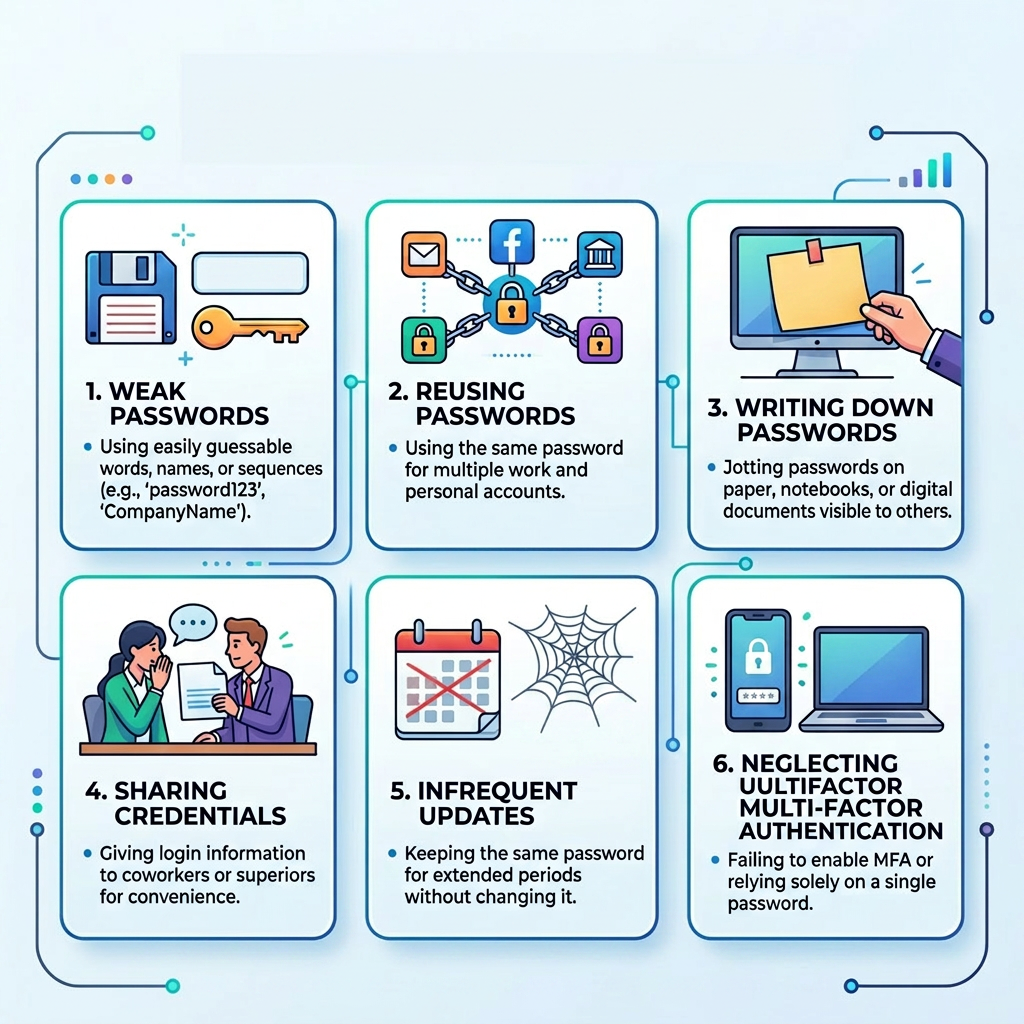

Password managers are important for keeping our information safe these days. As people and businesses have more online accounts, like cloud stuff and special keys to get into important places password managers help us keep all these things safe and reduce the risk of someone getting into our accounts.
Just because we use a password manager does not mean we are automatically safe. A lot of people and businesses make mistakes that make their password manager does not work as well as it should. If we do not set things up right or have rules or share our passwords with others or if our employees do not know what they are doing, we can have big security problems even if we have a good password manager.
We need to know about these mistakes so we can make our passwords safer follow the rules and reduce the risk of someone hacking into our accounts. This blog is about the common mistakes people make with password managers and how to avoid them.
Using weak master passwords
One of the mistakes is using a master password that is easy to guess. The master password is like the key to the box of passwords, so it is important. If someone gets into our master password they can get into all our accounts, which is bad.
A lot of people use passwords or phrases that are easy to figure out, or they use the same password for lots of things, or they use personal information to make their master password. Some people even use the password for their work account and their password manager, which is a big risk.
Businesses should make sure people use master passwords that are long and hard to guess. We should use passwords that are made up of characters instead of trying to remember something that is easy to guess. We should also use something called multi-factor authentication, which is like an extra lock on our password box.
If we have master passwords, we can be sure that our password manager is safe and that someone cannot get into our accounts without our permission. Password managers are like a box for our Password Manager, and the master password is like the key to the box, so we need to make sure the key is strong, like our Password Manager.
Failing to turn on multi-factor authentication
A lot of people think that just using a password manager is enough to keep their passwords safe. It is not. If you do not turn on Multi-Factor Authentication your password vault can still be hacked by phishing attacks, malware and people trying to guess your password.
Not turning on Multi-Factor Authentication is a common mistake that people make when using a password manager. Hackers like to target password manager accounts because they can get access to a lot of systems and sensitive information.
Companies should make sure that all employees use Multi-Factor Authentication when logging in to the Enterprise Password Manager and when they use accounts or access important systems from outside the office. There are ways to do Multi-Factor Authentication, such as using a special app, a hardware security key or a fingerprint reader.
Companies should also make sure that Multi-Factor Authentication is used when employees access systems from outside the office or when they use special accounts. Using Multi-Factor Authentication throughout the company makes it much harder for hackers to get in and reduces the damage that can be done if a password is stolen.
Storing passwords outside the password manager
when companies use an Enterprise Password Manager, a lot of employees still store their passwords in other places, such as spreadsheets, sticky notes or notebooks. This is not an idea because it creates a separate list of passwords that is not protected by the company’s security systems.
Employees often do this because it is easy or because they do not know any better or because they do not want to change the way they do things. Storing passwords in these ways is not safe and can make it easy for hackers to get access to important systems.
Companies should have rules about how passwords are stored and used and should make sure that employees know not to store passwords outside the approved password manager. Companies should also teach employees about the dangers of storing passwords in places and should encourage them to use the password managers special features, such, as the browser extension and mobile access to make it easy to use the password manager without compromising security.
Sharing passwords Is not a good idea
When people share passwords, it is a problem for companies. Employees often share their passwords with each other through email, chat or just by telling each other. They do not think about how this can be a security risk.
When passwords are shared in a way that’s does not secure it can cause a lot of problems. For example, the company cannot see who has the passwords and people may use them even after they leave the company or change jobs.
Companies should find a way for employees to share passwords. They can use a kind of safe called an encrypted vault and make sure that only the people who need to know the passwords can see them.
For important systems companies should try not to let people see the passwords at all. Instead, they can use a password manager that lets people get into the system without having to type in the password.
When companies have rules about sharing passwords, they can keep their important information safer and make sure they are following the rules.
Not paying attention to keys
A lot of companies focus on the passwords that regular employees use but they forget about the special keys that administrators use. These special keys like SSH keys are very important. Can be a big security risk if they are not managed properly.
SSH keys are often stored on employee computers, servers and cloud platforms without anyone keeping track of them. This means that companies do not know who has these keys or what they are being used for.
Companies should make sure to include these keys in their password management rules. They should store them safely change them often and keep track of who’s using them.
The rules for these keys should include:
- Changing the keys automatically
- Watching what people do when they use the keys
- Only giving people permissions when they need them
- Getting approval before giving someone permissions
- Keeping a record of what people do when they use the keys
- Only giving people the permissions, they need
If companies do not pay attention to these special keys, they may be, at risk of being attacked from the inside or having people get into their systems without permission.
Not rotating passwords and credentials regularly
Passwords that stay the same for a time can be easily compromised. Many companies do not change passwords enough especially for shared accounts, service accounts and important credentials.
When passwords are not changed hackers who get in can stay in without being detected. Changing passwords is more important when employees leave vendors are removed or there are suspected security problems.
Companies should make rules for changing passwords based on risk. They should prioritize accounts, shared administrator credentials, SSH keys, cloud accounts and third-party access credentials. Modern password managers can automatically change passwords, which makes it easier to follow rules.
Managing credentials should include adding employees changing roles giving temporary access and removing employees to ensure old or unnecessary credentials are removed quickly.
Changing credentials makes password security better and reduces risks.
Providing too much credential access
Another mistake with password managers is giving employees access to sensitive credentials and systems they do not need. Giving much access increases the risk of insider threats and creates more opportunities for hackers.
In companies, employees keep access to systems long after projects end or responsibilities change. Shared vaults with permissions can expose sensitive credentials to users who do not need them.
Companies should implement access control policies within the password manager. Credential access should follow the principle of privilege, where users only get permissions required for their specific job.
Approval-based workflows, temporary access provisioning and periodic access reviews help companies maintain control, over credentials and sensitive systems.
Proper access governance improves accountability while reducing the likelihood of misuse and unauthorized access incidents.
Neglecting employee training and security awareness
Technology can’t fully protect organizations if employees don’t know how to use password managers securely. Many password-related security incidents happen because users aren’t aware of phishing threats, unsafe sharing practices or secure password management procedures.
Organizations often make a mistake by deploying password managers without giving employees training or ongoing security awareness education. As a result, employees may still do things even with secure tools.
Businesses should hold training sessions on:
- Password manager usage
- MFA best practices
- Phishing awareness
- Secure password sharing
- SSH security
- Work credential protection
- Incident reporting procedures
Security awareness programs need to keep changing to address cyber threats and changes, in the company environment.
Trained employees are more likely to follow password management policies and help with broader organizational cybersecurity goals if they understand the importance of password security and password managers. They will use password managers securely. They will support cybersecurity goals.
Failing to keep an eye on password activity and compliance
If you do not keep an eye on things and check that everything is being done correctly companies can have a hard time finding out if something suspicious is going on with passwords or if someone is not following the rules or if someone is misusing their login credentials.
A lot of companies do not bother to check the records of what people’re doing or watch to see if people are sharing their passwords or check to see if their passwords are strong enough on a regular basis. This means they do not know what is going on. It is hard for them to find out if someone has gotten into an account that they should not be in or if someone has too much access to things or if someone has a password that they are not using or if someone is doing something unusual with their account.
Companies should always be checking to make sure everything is being done correctly with their passwords. They should be tracking things like:
- What is happening with peoples login credentials
- When someone tries to log in but fails
- When someone uses an account with more privileges
- When someone shares their password with someone
- When someone sets up security measures
- When someone uses a key to access the system
- If someone is not following the rules
- How healthy and strong people passwords are
If companies check everything regularly, they can make sure they are doing what they are supposed to be doing to follow the compliance regulations like GDPR, HIPAA, PCI DSS, ISO 27001 SOC 2 and what NIST recommends.
If companies keep an eye on things they can see what is going on better people are more likely to do the right thing and they are ready to respond quickly if something bad happens with the passwords.
Final thoughts
Password managers are really helpful for keeping our information online, but they only work well if we use them correctly. If we use passwords to lock them do not use extra security checks share passwords in a way that is not safe do not keep track of special keys give too many people access and our employees do not know how to use them safely then our password security is not good even if we have good tools.
If we know about these mistakes people, make with password managers and we fix them then we can keep our information safer follow the rules better reduce the risk of cyber-attacks and have a better plan for keeping our identities safe.
As people who want to hurt us online try to guess our passwords get into accounts and steal our identities companies that use good password manager practices will be much safer, from these kinds of attacks and will be able to stay safe online for a long time.
Leave a Reply